
How to Start Crypto Trading in 2026: Beginner Safety Checklist
Start crypto trading safely: choose an exchange, pass KYC, deposit, buy your first coin, manage risk, avoid scams, and cash out.
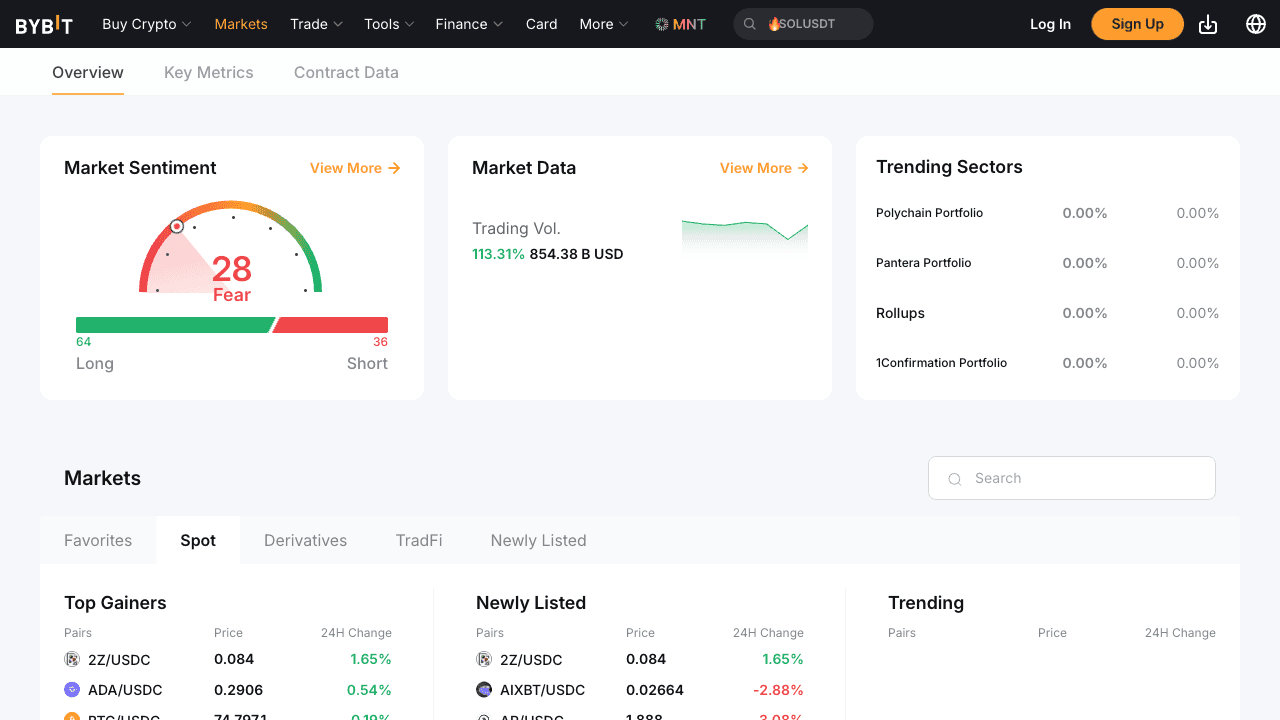
The safest way to start crypto trading is to choose a regulated exchange, verify your account, deposit a small amount, buy a major asset first, and learn risk management before using leverage. Beginners should focus on survival and safety, not fast profit.
VORTEILE
- Start with as little as $50 — no large capital required
- Spot trading has no leverage risk (you can't lose more than you put in)
- Regulated exchanges provide consumer protections and dispute resolution
- 24/7 markets — trade at any time, from anywhere
NACHTEILE
- Crypto is highly volatile — 30–50% swings are common
- Many scams specifically target beginners
- Tax reporting obligations are real and vary by country
- Emotional decision-making (panic selling, FOMO buying) is the #1 beginner mistake
Beginner Safety Checklist — Do These Before Your First Trade
1. Choose only regulated or large well-known exchanges (Bybit, Coinbase, Kraken, OKX). Never use a small unknown exchange — liquidity, security, and withdrawal risk matter more than fees.
2. Enable 2FA immediately after registration. Use an authenticator app (Google Authenticator, Authy), not SMS — SIM swaps are a real threat to crypto accounts.
3. Deposit only money you can afford to lose completely. Crypto can drop 50–80% and stay down for 1–2 years. Start with $50–200 maximum until you understand what you are doing.
4. ⚠️ Do NOT use leverage as a beginner. Leverage lets you lose more than you deposited — beginners who use 10x leverage on a 10% price move lose everything. Stick to spot trading (you can only lose what you put in). Leverage is for experienced traders only.
5. Never buy a coin because someone hyped it in a Telegram group, YouTube video, or Twitter post. These are often pump-and-dump schemes where promoters sell while beginners buy.
6. Learn to withdraw to your own wallet (Tonkeeper for TON). Do not keep large amounts on an exchange long-term — exchanges have been hacked and gone bankrupt.
Choosing Your First Crypto Exchange
The exchange you start with matters more than beginners realize — fees, interface complexity, and available features directly affect your experience for the next 6–12 months. For non-US users, Bybit is the best starting exchange: 0.1% spot trading fees (half of Coinbase's rate), a clean beginner-friendly interface, excellent mobile app, P2P for fiat cash-out, and a welcome bonus program that can provide up to $30,100 in rewards for new users who complete verification and make their first deposit.
For US residents, Bybit is unavailable due to regulatory restrictions. Coinbase is the best US alternative: publicly listed on NASDAQ, FDIC-insured for USD balances up to $250,000, simple interface designed for first-time users, and available in all 50 states. The tradeoff is higher fees — Coinbase's standard rates are 0.4–0.6% vs Bybit's 0.1%. For US users who trade more actively, Coinbase Advanced Trade (the pro interface) drops fees to 0.4% maker and 0.6% taker.
Never start with a small, unknown exchange just because it promises lower fees. Liquidity depth, security track record, customer support quality, and regulatory compliance matter enormously. The small fee difference between a major exchange and a no-name one is worth nothing if the exchange gets hacked or goes insolvent (as happened with FTX in 2022, costing users billions).
Your First Deposit and How to Fund Your Account
Most beginners should start with a bank transfer or SEPA deposit if available — it's the cheapest option with near-zero fees. The process: in Bybit, go to Buy Crypto → Bank Transfer (or Fiat Deposit) → select your currency → transfer from your bank. SEPA deposits in Europe are typically fee-free for amounts over €100 and arrive same-day.
Credit and debit card purchases are faster (instant) but cost 1.5–3.5% more — fine for small first purchases when convenience outweighs cost. For a $50 test purchase via card, the $1–2 extra fee is acceptable. For regular larger purchases, bank transfer is significantly cheaper.
Starting budget recommendation: $50–200 for your first experience. This is enough to feel real stakes while learning the interface, but not so much that a mistake would be catastrophic. The primary goal of your first trade is not to make money — it's to understand how exchanges work: deposits, order types, wallet addresses, withdrawal flows. Many experienced traders say their 'tuition fee' in early mistakes was the best education they could have paid for.
Understanding Order Types: Market vs Limit
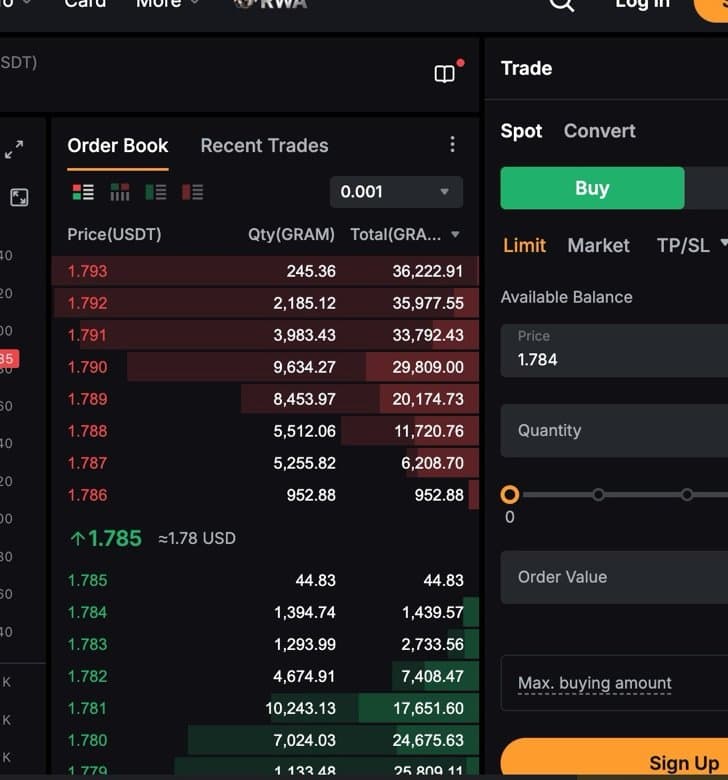
Every exchange has two fundamental order types. A market order executes immediately at whatever the current price is — fast, certain, but you accept the spread (small difference between buy and sell prices). A limit order lets you specify the exact price you want to buy or sell at — the order sits open until the market reaches your price or you cancel it. Limit orders capture better prices but aren't guaranteed to fill.
For beginners making first purchases: market orders are fine for amounts under $500. The spread on major pairs like TON/USDT or BTC/USDT on Bybit is typically 0.05–0.15% — negligible for learning purposes. As you trade more frequently or in larger amounts, switching to limit orders saves real money: on a $1,000 purchase, a 0.1% better fill price from a limit order saves $1. Over many trades, this compounds significantly.
One crucial beginner mistake to avoid: setting a limit order and forgetting it. A limit buy at $4 for TON that you set during a dip may execute weeks later when you've forgotten about it and no longer want to buy at that price. Always set reminders for open limit orders, or use Bybit's 'Good Till Cancelled' orders with explicit expiration dates.
Risk Management: The Rules That Keep You in the Game
The number that should scare every beginner: studies consistently show that 70–84% of retail crypto traders lose money. The primary cause isn't the market — it's psychology. FOMO destroyed portfolios at $124,000 Bitcoin in August 2025 — beginners who bought the peak faced an immediate 10–15% pullback within days. The antidote is rules set before you're emotionally invested: 1–2% maximum risk per trade, a written reason for every purchase, and a stop-loss set at the moment you enter — never after.
Position sizing: the 1–2% rule means if you have $1,000, you risk $10–20 maximum per trade — sized so that hitting your stop-loss only costs that much. This sounds small but means you can be wrong 30 times in a row and still have over half your capital. Practical stop-loss technique: tiered exit — sell 33% of the position at -5%, 33% at -10%, and the final 33% at -15%. This reduces emotional decisions at each threshold. Never trade with leverage until you have 6+ months of profitable spot trading — 10x leverage means a 10% adverse move wipes 100% of your margin; 5x leverage liquidates on a 20% drop. Crypto moves 10–25% routinely.
Portfolio allocation that survives market cycles: 50% large-caps (BTC, ETH), 30% mid-caps with real use cases, 20% stablecoins or cash. Rebalance quarterly — when a position grows beyond its target, trim and redistribute. Dollar-cost averaging beats lump-sum buying for volatile assets: $100/week for 10 weeks versus $1,000 upfront typically results in a lower average entry price because some of your buys land at lower prices. The risk-to-reward ratio rule: only enter trades where the potential gain is at least 2× the potential loss. If you risk 1%, target at least 2% gain before closing.
The Full Path: From Fiat to Crypto to TON to Telegram Stars
If you're arriving at this guide through the context of Telegram Stars and TON, here's the practical complete path that connects everything: register on Bybit → deposit EUR/USD via bank transfer → buy TON on TON/USDT spot market → withdraw TON to Tonkeeper → use Tonkeeper on fragment.com to buy Telegram Stars at the cheapest rate (saving 30% vs the App Store). Total time from zero to Stars: about 30 minutes the first time, 5 minutes on repeat.
Beyond this initial use case, as you get comfortable with the basics, the natural progression is: staking your idle TON for 3–6% APY in Tonkeeper's Earn section, using Bybit's Earn products for USDT yield while you hold cash on exchange, exploring TON DeFi on DeDust and STON.fi for higher yields, and eventually converting gains back to fiat via Bybit P2P when you want to cash out.
The most important mindset shift for long-term success in crypto: think in time horizons, not daily prices. Checking your portfolio 10 times a day correlates with worse outcomes — price anxiety leads to impulsive decisions. Pick a portfolio review cadence (weekly for most people) and stick to it. The investors who did best in every crypto cycle so far were the ones who bought quality assets, stored them safely, and checked less frequently.
Quick Comparison
| Feature | Bybit | Coinbase | OKX | Kraken |
|---|---|---|---|---|
| Available for US users | ❌ No | ✅ Yes | ❌ No | ✅ Yes |
| Spot trading fee | 0.1% | 0.4–0.6% | 0.08–0.1% | 0.16–0.26% |
| TON support | ✅ Strong | ✅ Yes | ✅ Strong | ⚠️ Limited |
| Beginner interface | ✅ Clean | ✅ Very simple | ⚠️ Complex | ⚠️ Moderate |
| Welcome bonus | Up to $30,100+ | Up to $10 BTC | None standard | None standard |
| P2P fiat off-ramp | ✅ Yes | ❌ No | ✅ Yes | ❌ No |
| Regulatory status | International | NASDAQ-listed, US-regulated | International | US-regulated |
Schritt-für-Schritt-Anleitung
Frequently Asked Questions
How much money do I need to start crypto trading?
$50–100 is the practical minimum for a meaningful first experience. Below $50, network withdrawal fees eat too large a percentage of your capital. $100–200 gives you enough to try buying, withdrawing to a wallet, and using assets (like buying Stars via Fragment) without feeling each step. Never start with money you can't afford to lose.
Is crypto trading legal in my country?
In most countries: yes. Crypto ownership and spot trading is legal across the EU, UK, Australia, Canada, Japan, and most of Asia. US residents can trade on Coinbase, Kraken, and Gemini legally. Some countries restrict crypto (China, Iran, etc.). Always verify your local laws and report crypto gains to your tax authority.
What's the difference between a CEX and DEX?
A centralized exchange (CEX) like Bybit or Coinbase holds your funds and handles order matching — easier, more liquid, customer support available. A decentralized exchange (DEX) like DeDust on TON runs on a blockchain — you keep full custody of funds, no KYC, but more complex. Start with a CEX; explore DEX once you understand self-custody wallets.
How do I avoid the most common crypto scams targeting beginners?
The four golden rules: (1) Never share your private key or seed phrase with anyone — ever. (2) Ignore all DMs promising investment returns, 'account issues', or free crypto. (3) Only access exchanges via bookmarked URLs, never Google Ads links (fake exchanges are common). (4) Never send crypto to someone who promises to send back more — this is the oldest crypto scam and still works on thousands of people monthly.
What taxes do I pay on crypto trading?
In most countries, crypto is taxed as property. Buying crypto is not taxable. Selling, swapping, or using crypto to buy goods/services is taxable — the gain or loss equals sale price minus purchase price (cost basis). In the EU, gains under €600/year are often tax-free (varies by country). Keep records of all transactions with dates and amounts — crypto tax software like Koinly imports exchange history automatically.
What should I do with crypto after buying — leave it on the exchange?
For active trading: leaving funds on Bybit or Coinbase is fine. For long-term holding (weeks, months, years): withdraw to a self-custody wallet like Tonkeeper (for TON) or Trust Wallet (for multi-chain). 'Not your keys, not your coins' is the industry maxim — exchange failures (like FTX) can permanently lose exchange-held balances. Keep only what you're actively trading on exchanges.
Related Guides
Bybit vs Coinbase Advanced Trade (2026): Fees, Features & Verdict
Bybit vs Coinbase compared side-by-side: 0.1% vs 0.4–0.6% fees, coin selection, leverage, US availability. Includes fee savings calculator and verdict for each use case. Updated 2026.
How to Deposit Crypto on Bybit Safely: Network Rules for 2026
Deposit crypto to Bybit without losing funds. Learn network selection, address checks, memo/tag rules, test deposits, and common errors.
Best VPN for Crypto Trading in 2026: Security, Speed and Access
Compare VPNs for crypto trading: exchange access, privacy, speed, no-log policies, mobile apps, and mistakes that can trigger account reviews.
Get Weekly Stars & TON Updates
Market analysis, new guides, and earning tips — free, every week.
No spam. Unsubscribe anytime.
Berechnen Sie Ihren potenziellen Gewinn
Wenn Sie Stars kaufen, um Ihren Kanal zu monetarisieren, prüfen Sie genau, wie viel Sie verdienen können.